
How to Replace Your Lawn with Native Grass: Colorado Front Range Xeriscaping Guide
When I first started exploring drought-tolerant landscaping, I was surprised to discover that the easiest approach to xeriscaping your Colorado yard isn't ripping out your lawn entirely — it's replacing it with a drought-tolerant native grass mix. You can still have a green, lush-looking lawn; it just won't need nearly as much water.
Believe it or not, this is my native grass lawn. Once established, I watered it just once per week all summer — including through several 100°F+ heat waves. It stays green during the heat of summer and goes naturally dormant (light brown) during the cooler seasons, which is completely normal and healthy for these grasses.
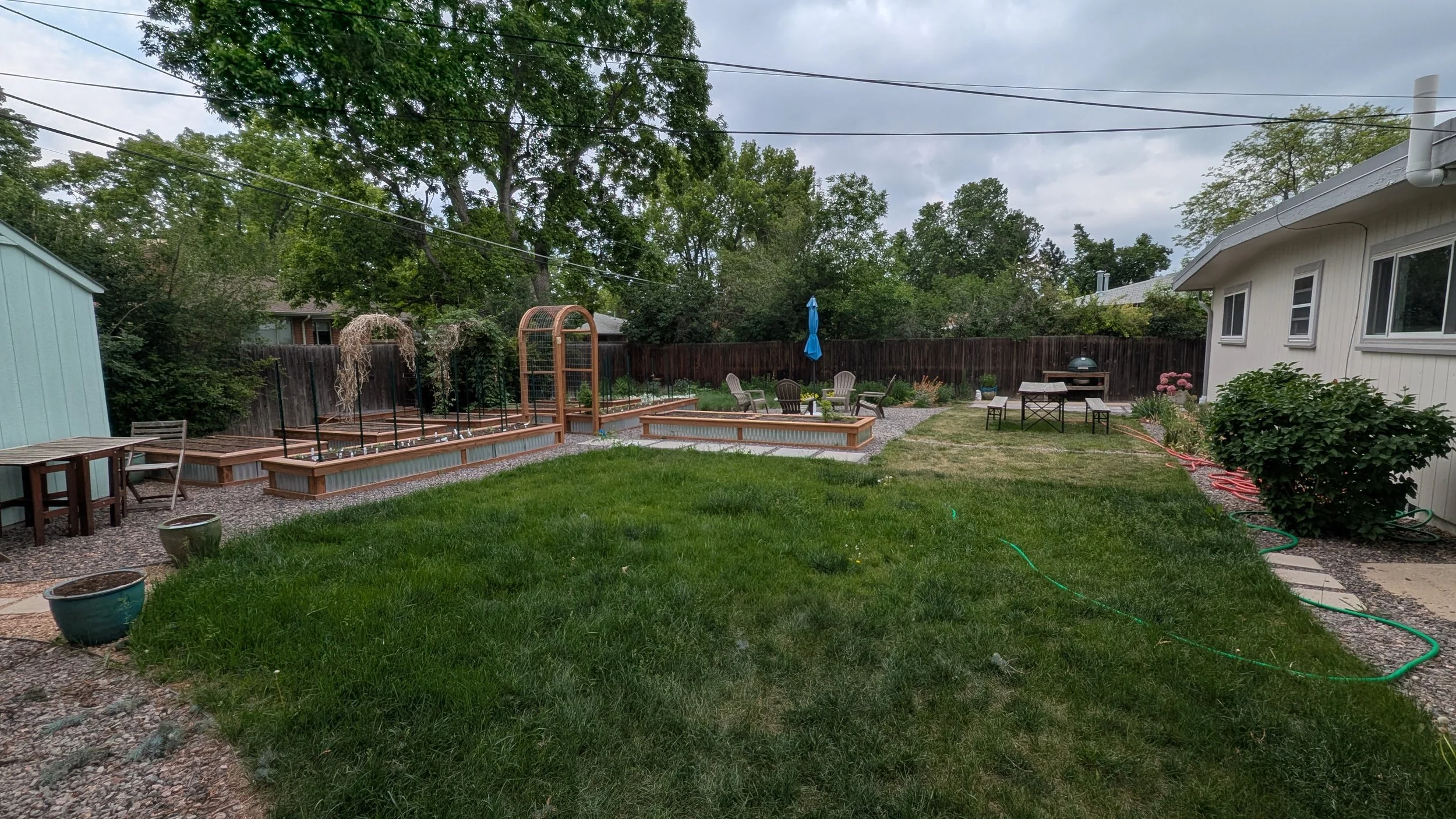
My native grass lawn in the foreground (spring of 2025).
After getting a lot of questions about how I did it, I put together this guide based on my own experience. Note: This guide is specific to the Colorado Front Range (Denver metro, Boulder, Fort Collins, Colorado Springs) but may apply to other dry prairie climates.
One important requirement before you start: this grass mix needs full sun. Buffalo grass and blue grama will not thrive in partial shade or full shade. If your lawn area gets significant shade from trees or structures, this conversion may not work well for you.
Ideal Timeline at a Glance
Before diving into the steps, here's the big-picture timing:
Summer: Stop watering your existing lawn and let it die off
Fall: Rake up dead grass
Winter: Let the grass go dormant
Spring (May): Rake again and re-seed with native mix
Year 1–2: Water more heavily, weed regularly, re-seed bare spots each spring
Year 2+: Fully established — minimal watering and maintenance
Step-by-Step Process
1 - Stop watering your existing lawn.
If you have a standard fescue lawn, the easiest way to kill it is to simply stop watering it for the entire growing season. Also stop using any lawn chemicals at this stage — fertilizers and weed suppressants will kill native grasses too.
A note on Kentucky bluegrass (KBG): Unlike fescue, Kentucky bluegrass is extremely drought tolerant and will not die off from lack of watering alone. If you have KBG in your lawn — or sections of it mixed in — you'll need to manually remove those clumps. I had to do this in my own lawn. You can identify KBG by its boat-shaped leaf tip and fine texture. Any KBG left in place will survive and compete with your native grass, so it's worth taking the time to pull it out before reseeding.
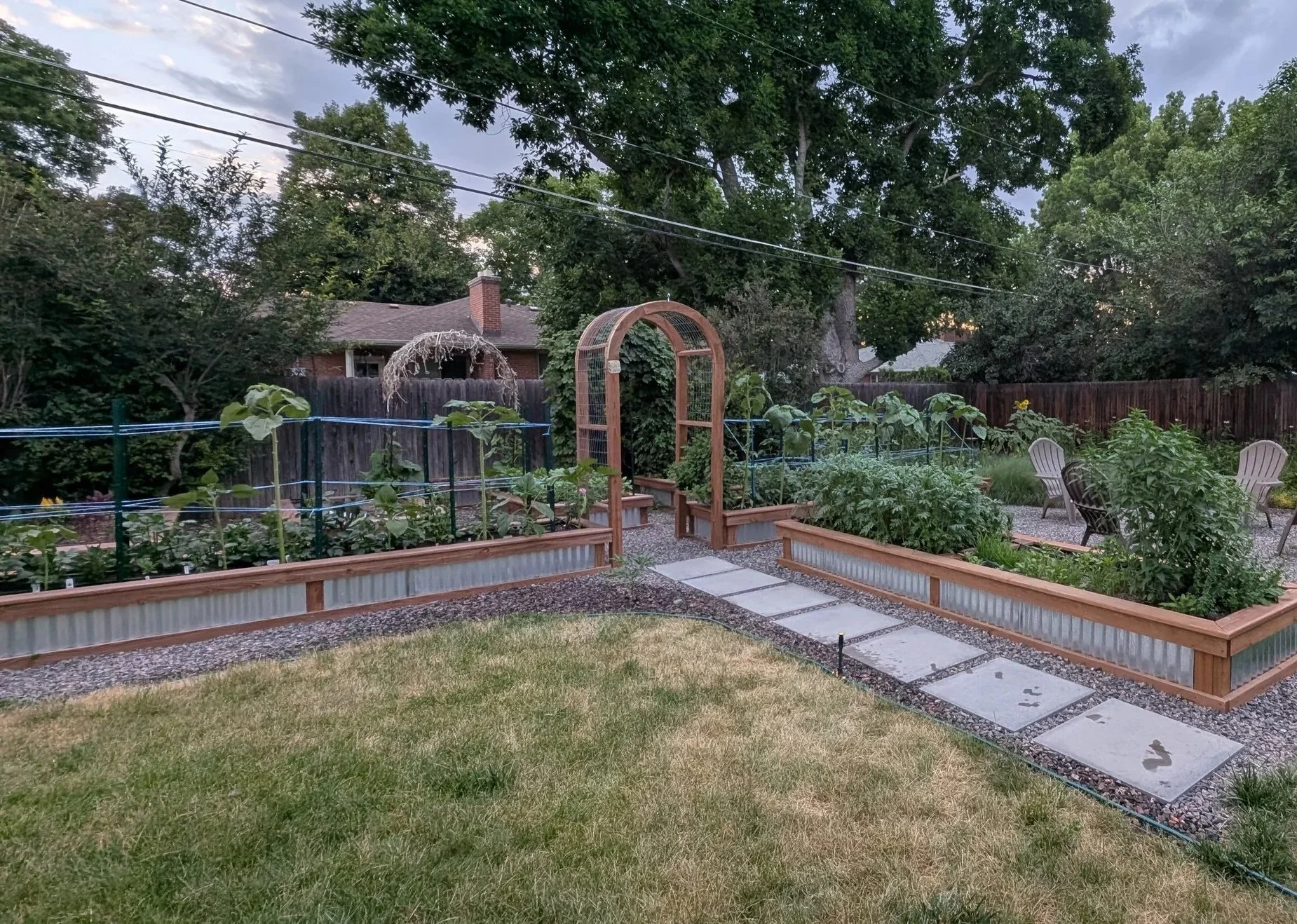
My original fescue lawn in mid-summer. No watering, no chemicals.
2 - Rake up the dead grass as it dies.
As your existing lawn dies off, rake up the dead material and compost or dispose of it. This starts opening up bare patches in the soil, which creates space for native grass seeds to take root.
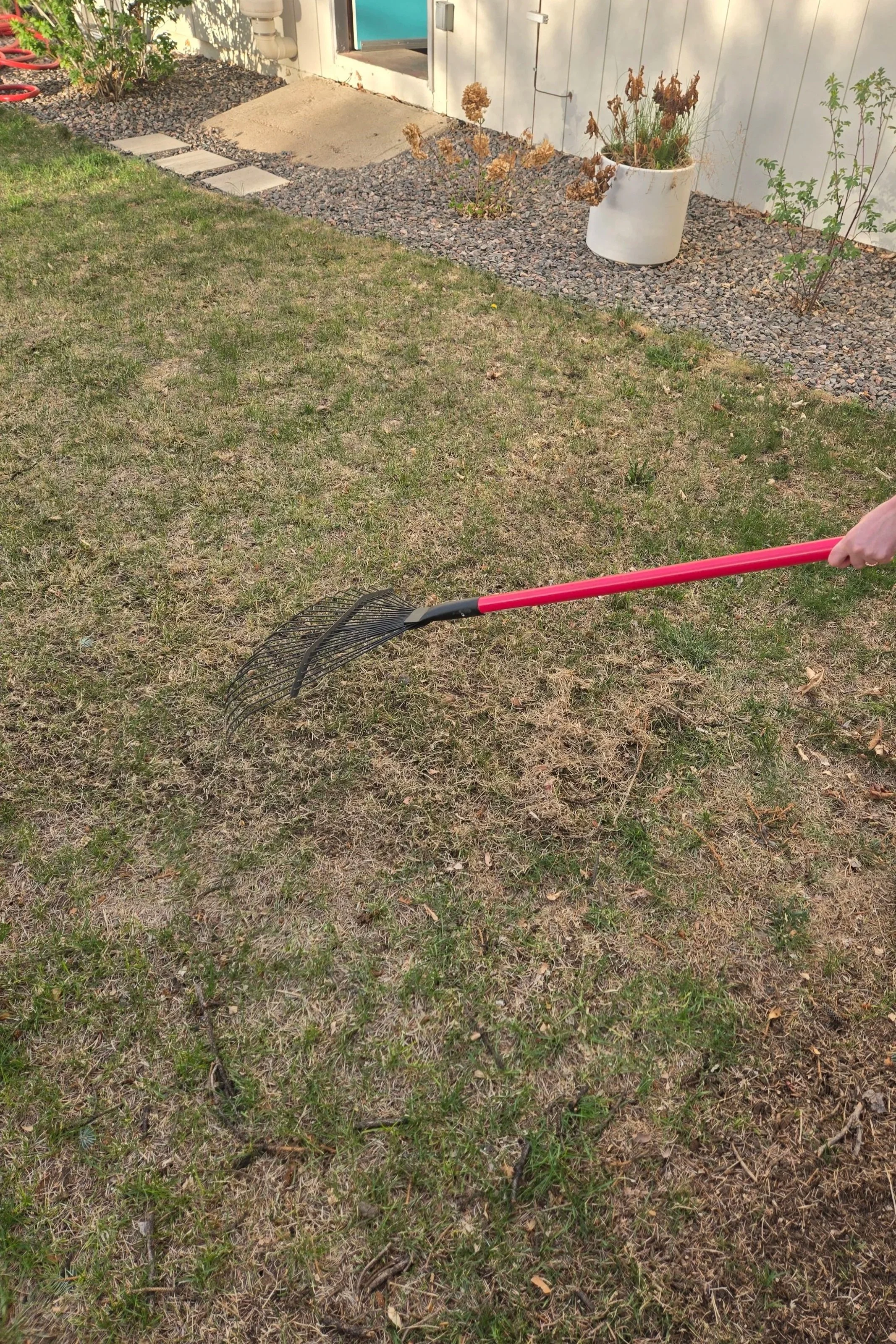
Raking out dead fescue to prep for native grass reseeding.
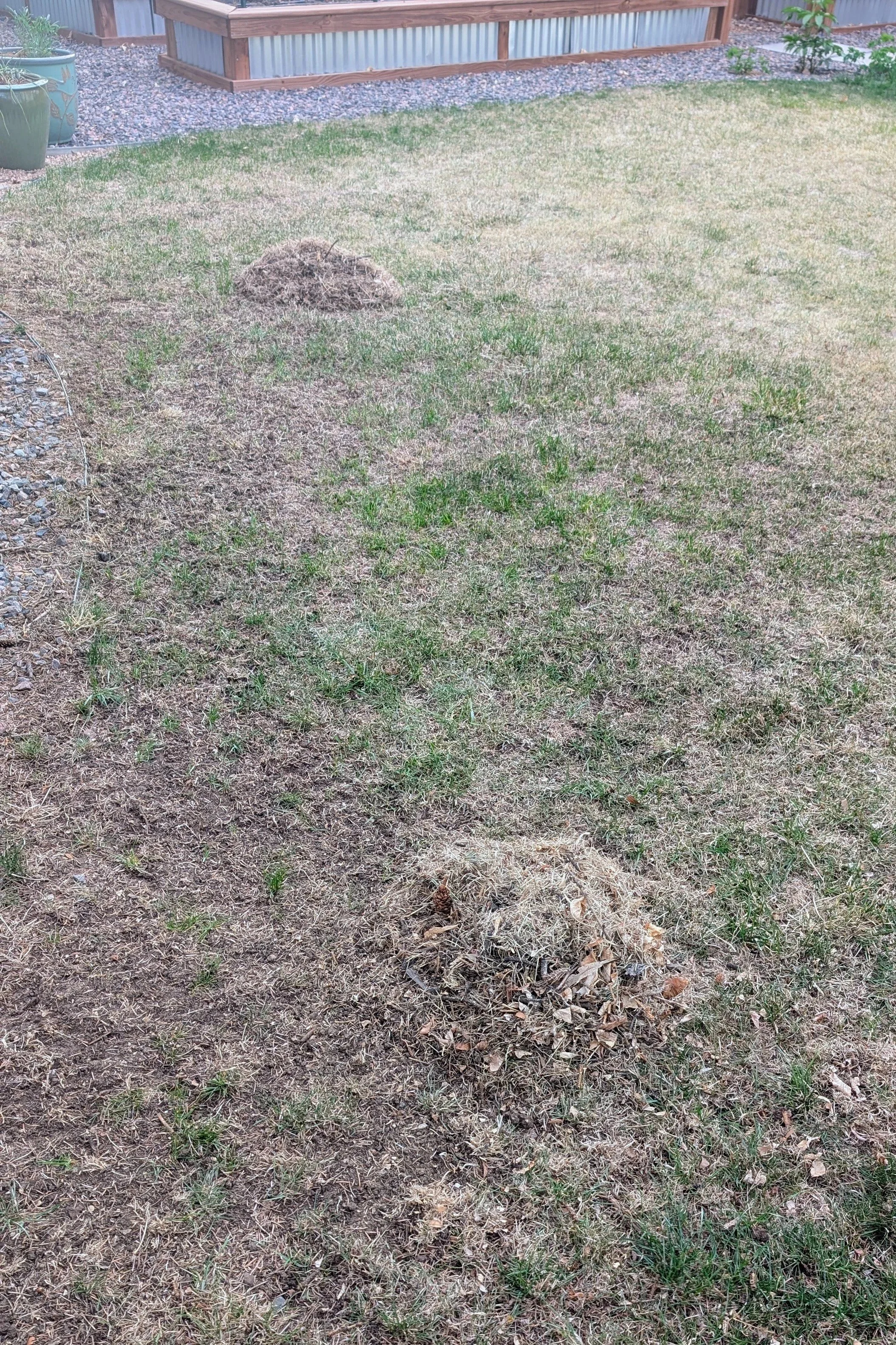
3 - Re-seed in the spring (May is ideal).
In the spring, do one more thorough rake to remove as much remaining dead grass as possible, then re-seed with a native lawn grass mix. These mixes typically include buffalo grass and blue grama at minimum, both of which are well-suited to Colorado's climate and soil.
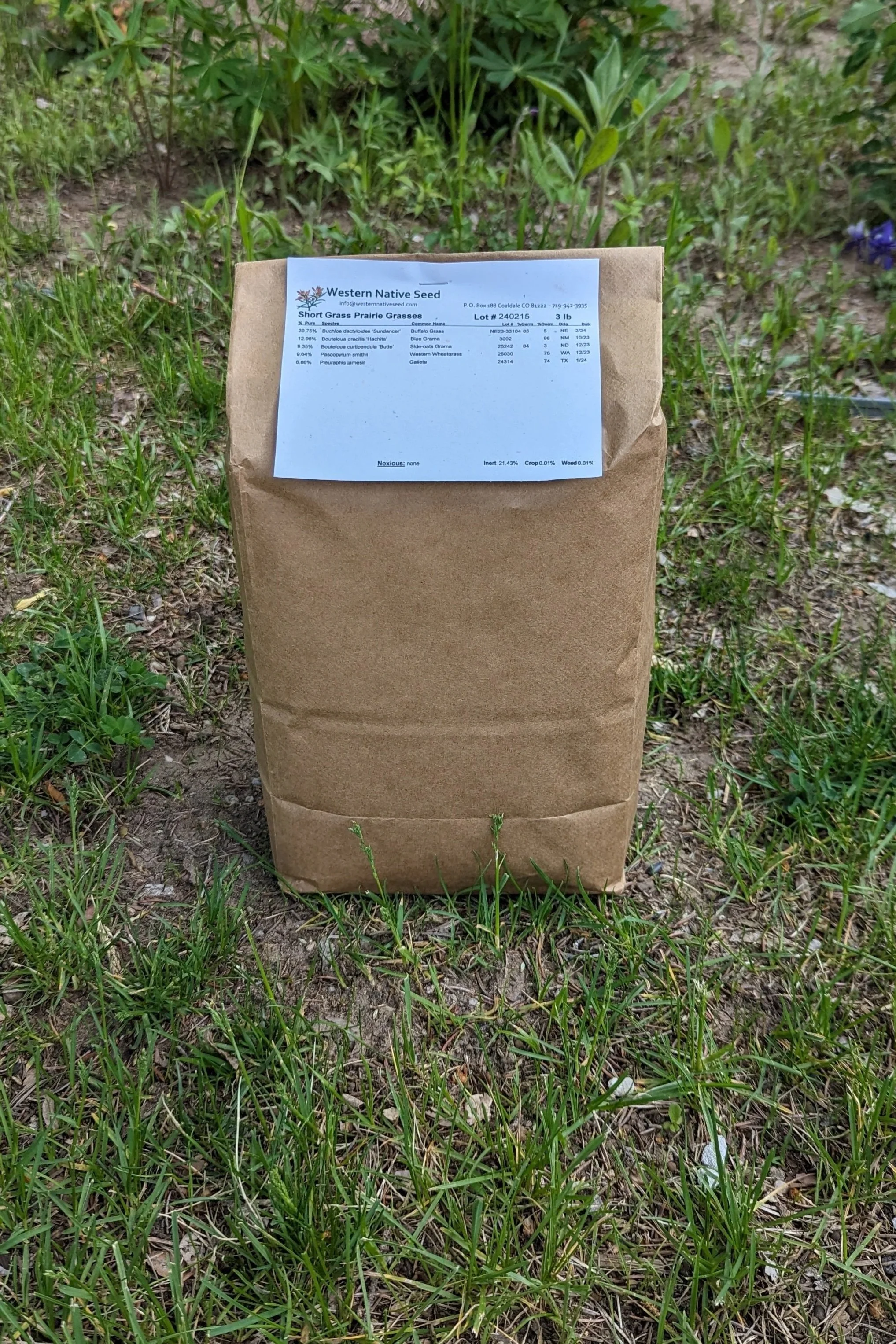
Here are the grass mixes I use:
Short Grass Prairie Seed Mix from Western Native Seed
Grows in Colorado, Kansas, Oklahoma, Texas, and New Mexico
Fit for elevation range 3,000' - 5,500'
Needs 10-16 inches precipitation with little winter snow cover and summer rain
Xeriscape Lawn Mix from Western Native Seed
Fit for elevations up to 7,000'
Needs 12-20 inches precipitation from summer rain
For re-seeding small lawn patches, I will do this by hand, but for re-seeding the entire lawn area, I use a seed spreader like this.
When exactly in spring should you reseed? I aim for May, but the more useful rule is to watch for rainy stretches. Anytime between April and June when you have a week or more of frequent rain in the forecast is a good window. The rain does the watering work for you during the critical germination period and gives the seeds the best start.
Re-seeding in the spring.
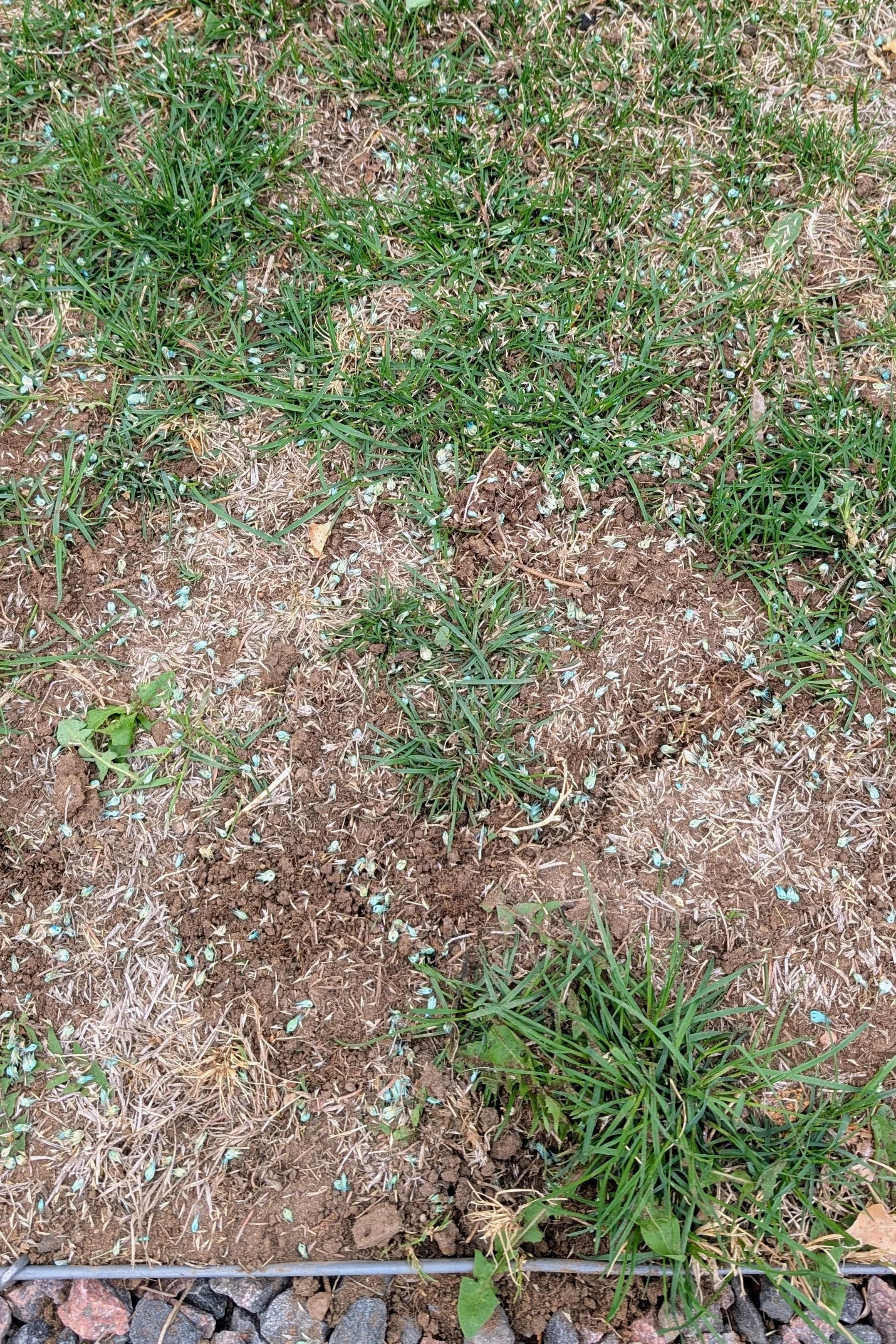
Immediately re-seeding after pulling weeds.
4 - Water to establish the new grass.
Watering is critical during establishment — but only for the first couple of seasons. Follow this schedule:
Weeks 1–2: Water daily to ensure germination
Remainder of Season 1 and all of Season 2: Water 3x per week for at least 20 minutes per session to encourage deep root development
After this establishment period, you shouldn't need to water this heavily again.
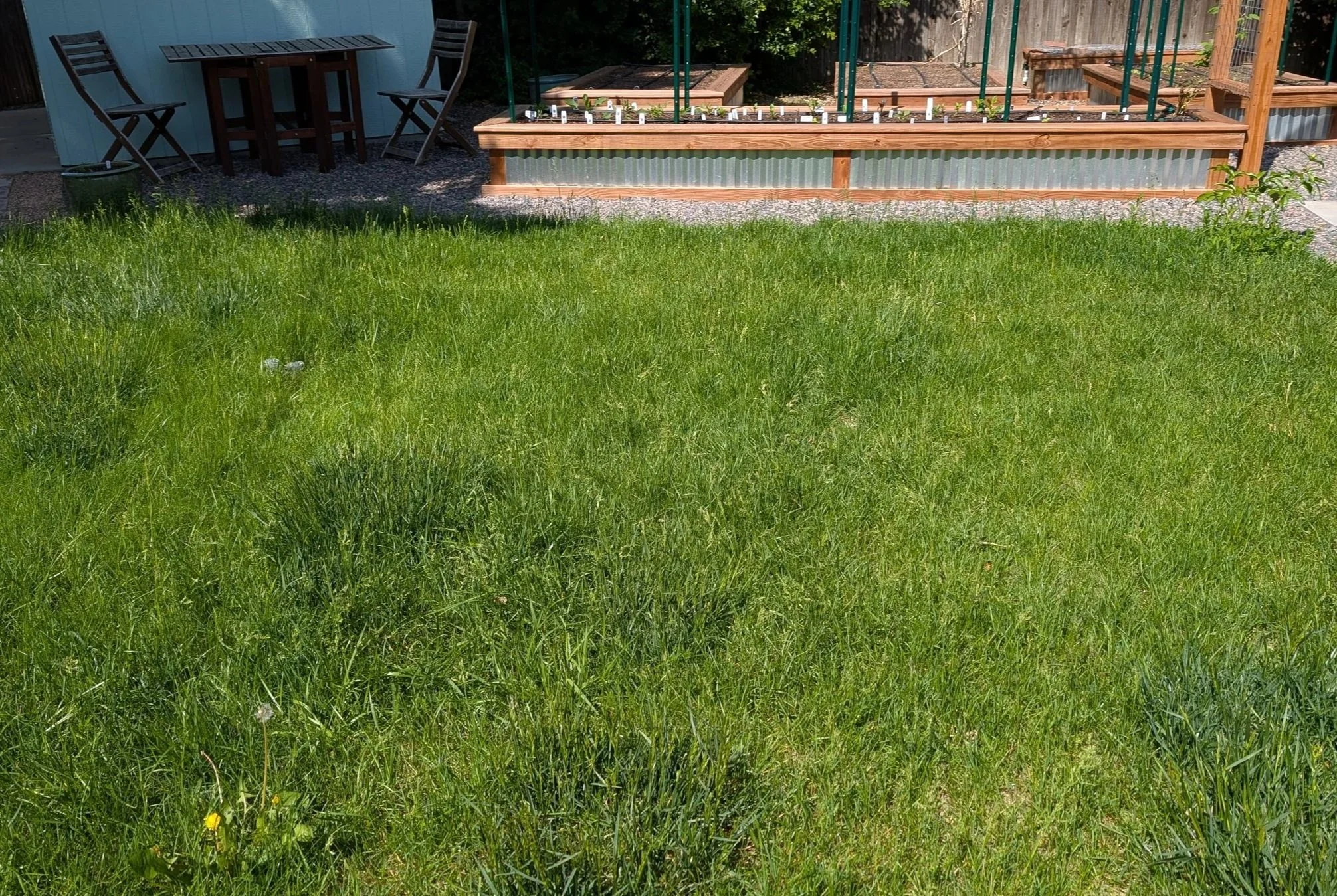
Watering after spring reseeding. The lawn is mid-transition here, not fully converted yet.
5 - Repeat each spring until the transition is complete.
As you water less each year, any surviving original lawn will continue dying back. Each spring, rake up dead material and re-seed bare patches. It typically takes about two years to fully replace the original lawn with native grasses.
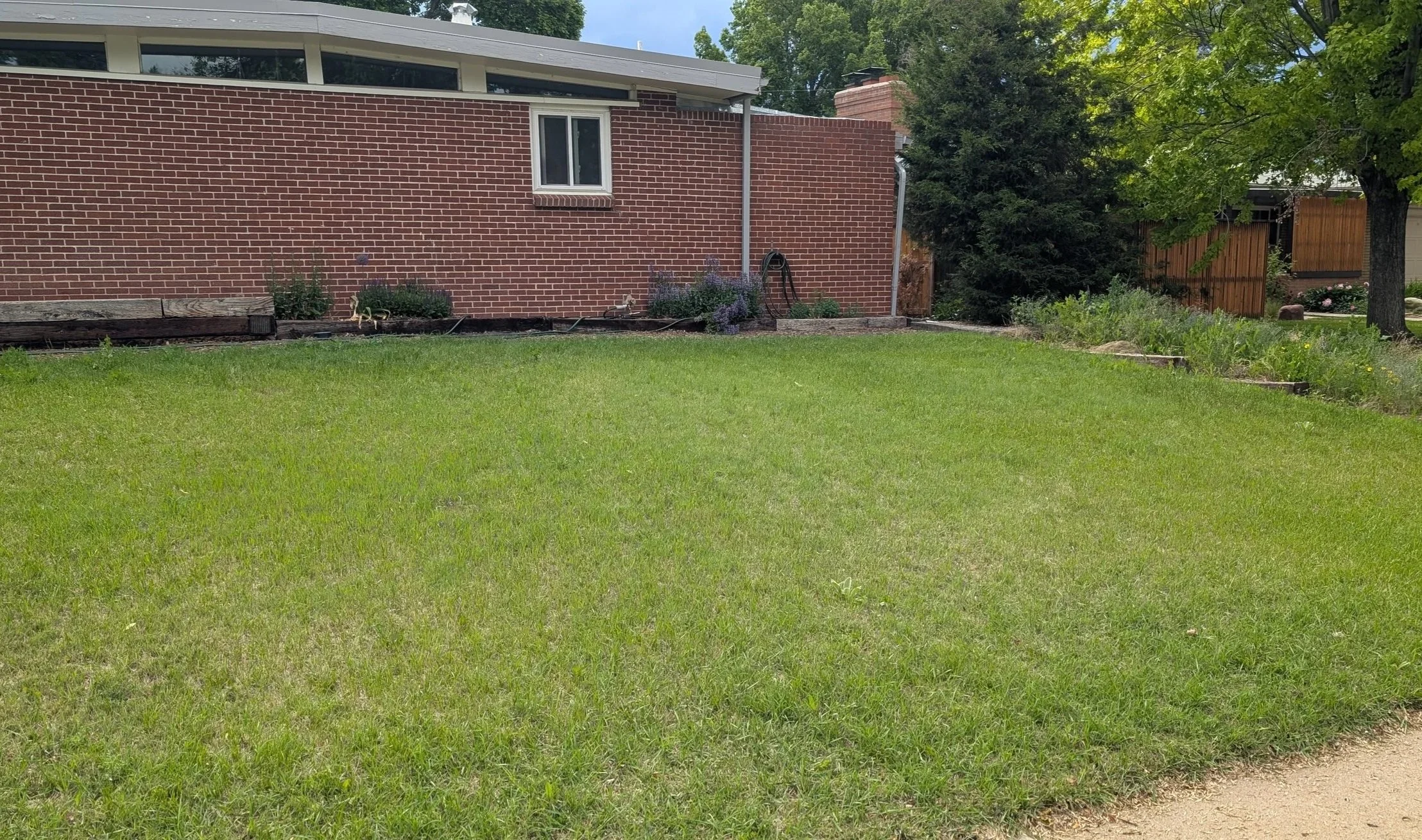
My front yard after three full seasons, completely transitioned to native grass (Summer 2025).
Annual Maintenance
Once established, this lawn is low-effort. Here's what ongoing care looks like:
Mowing: Mow no more than every two weeks during the warm season. These are clumping grasses that actually benefit from being left a bit longer — it encourages denser growth.
Aeration: Aerate each spring right before re-seeding to improve germination rates.
Watering: Once fully established, one 20–30 minute watering per week is all you need through the warm season.
Re-seeding: Re-seed any thin or bare patches each spring to keep the lawn filling in.
No lawn chemicals: Do not use fertilizers or weed suppressants. These grasses are native and adapted to your soil — they don't need them, and the chemicals will harm the grass.
Weeding: Stay on top of weeding during the first couple of years. While the native grass is still filling in, bare patches are more vulnerable to weed pressure. Once the lawn densifies, this becomes much less of an issue.
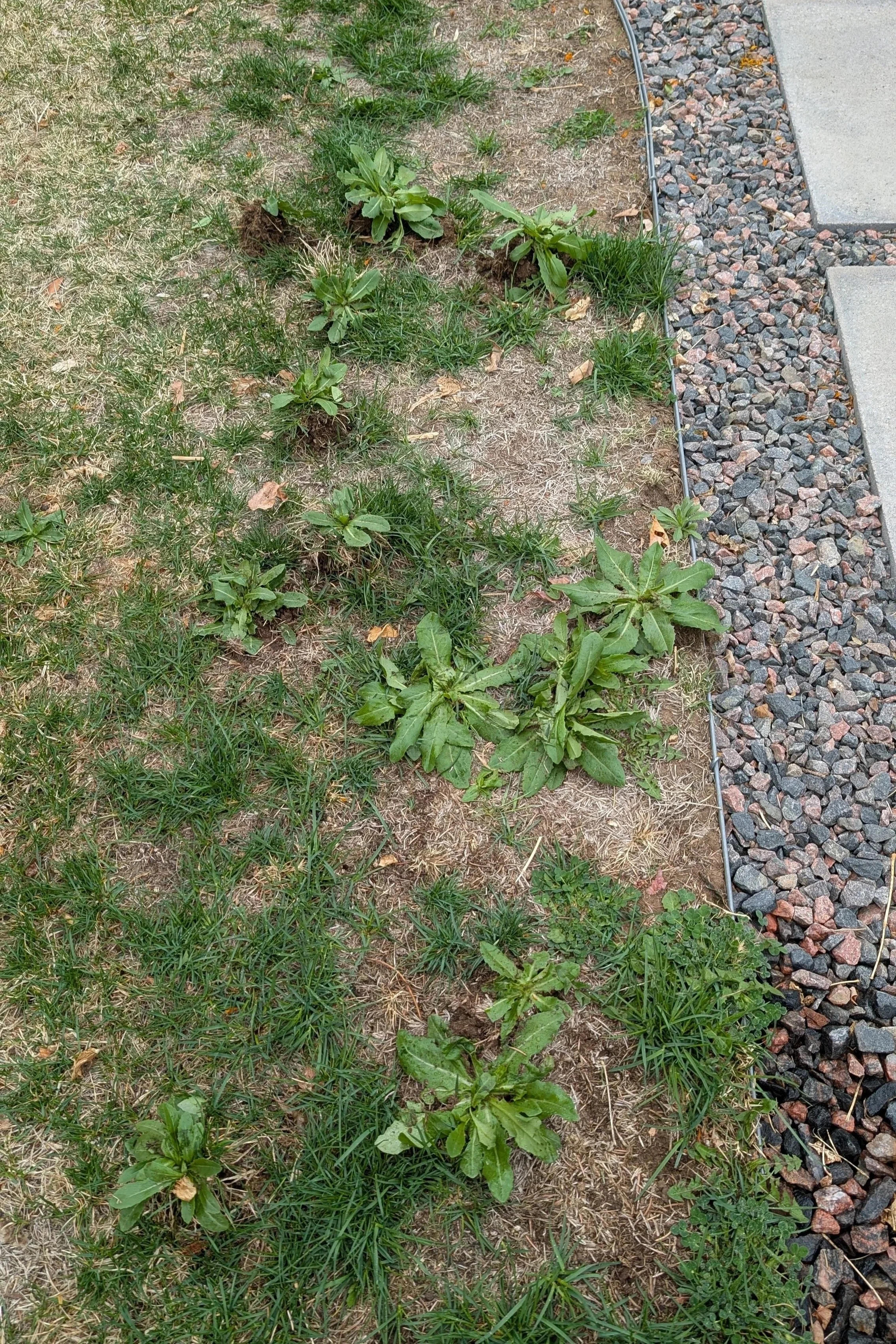
Winter weeds filling gaps during the establishment phase. Gets much better once the lawn densifies.
A Few Things Worth Knowing
Re-seeding on bare soil: I've tried seeding this mix directly onto bare soil (without the dying-lawn base) and had about 50% success. The existing dead grass clumps actually seem to help with moisture retention and germination — so the gradual kill-and-reseed method works better than starting from scratch.
Dogs: A common concern is whether these grasses hold up to dogs. I haven't personally tested this, but I've heard that dog-specific turf grass blends (such as Dog Tuff) have similar drought and heat tolerance. Worth researching if that's a factor for you.
Want more of a meadow look? When you reseed, you can sprinkle in Wyoming paintbrush (Castilleja sp.) varieties alongside your grass mix. Wyoming paintbrush has a parasitic relationship with blue grama grass, meaning it actually uses the grass as a host (in a beneficial way), so a native grass lawn is an ideal environment for it. Skip mowing entirely and you'll get a natural, wildflower meadow effect over time.
Thinking about going further? Native grass lawns are just one piece of xeriscaping or converting a lawn to drought-tolerant Colorado native plants. I'm also converting my front yard beds to Colorado native plants and high-desert perennials. Check out my Garden Design services if you want help planning your own transformation.
Will the fescue come back? Yes, some fescue does return the first few years, and that's expected. The theory is that since fescue needs significantly more water than native grasses, it continues dying back a little more each season as you water less. The patches it leaves behind are then reseeded with the native mix each spring. Stopping water for a full summer kills off a lot of fescue initially, but as noted above, Kentucky bluegrass won't die this way and needs to be manually removed. Over two to three seasons, the native grass gradually outcompetes and replaces what's left.
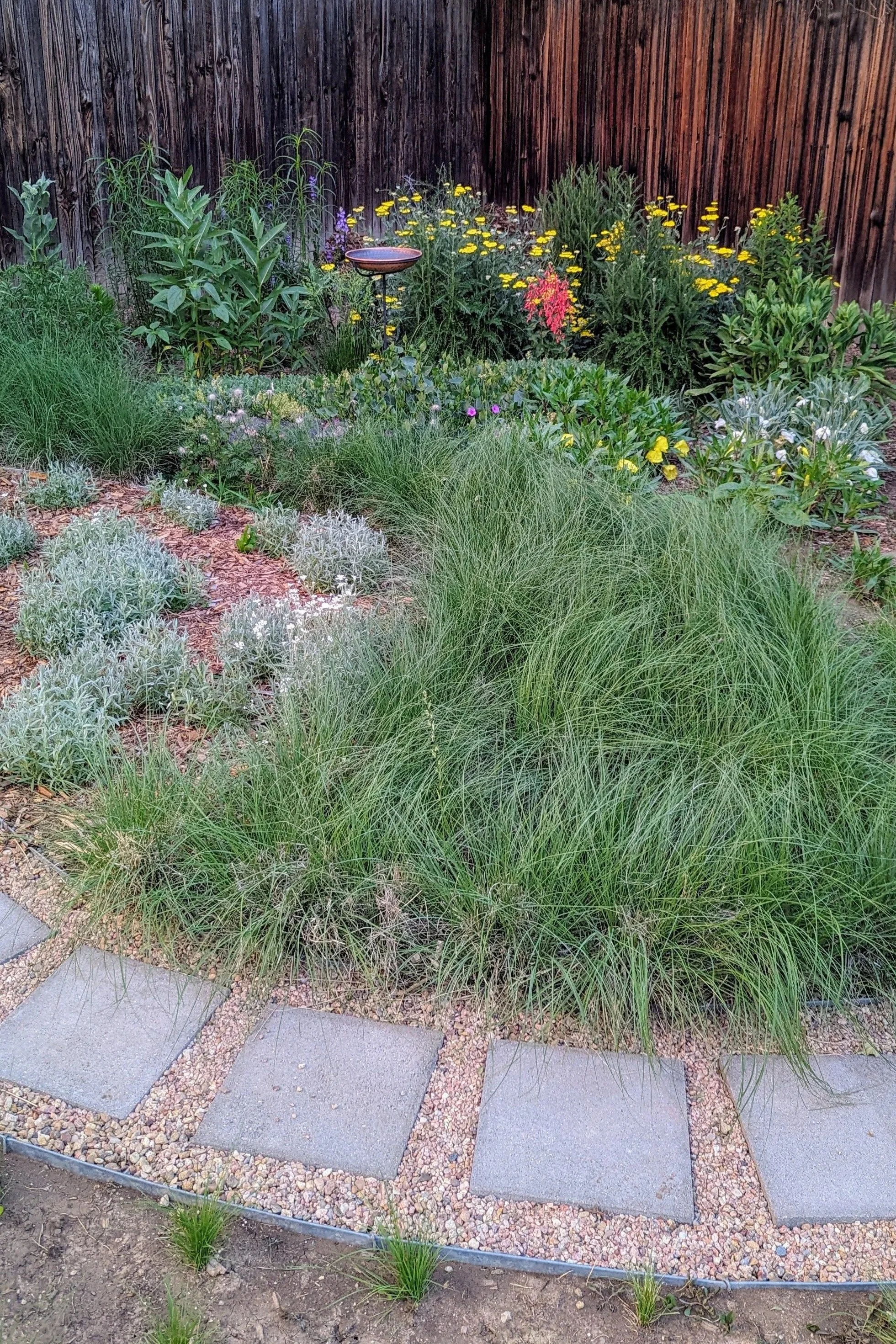
A section allowed to fully grow out, showing how blue grama spreads and carpets.
